Both floor springs and overhead door closers control how a door closes — but they solve very different problems. Picking the wrong one is among the most common (and expensive) glass-door mistakes.
What a Floor Spring Does
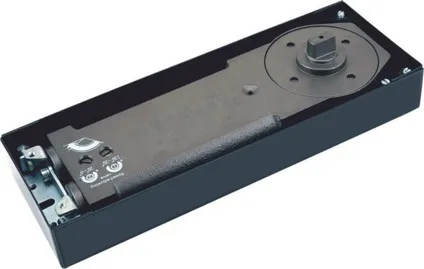
A floor spring sits in a small box recessed into the floor, directly under the door's pivot point. It carries the door's weight and controls its swing in both directions. This makes it the default choice for frameless glass doors, which cannot support surface-mounted hardware.
What a Door Closer Does
An overhead closer mounts on the door frame and leaf, pulling the door shut in one direction. It works well for framed wooden or metal doors, but on frameless glass it is visually intrusive and needs a top rail.
Quick Decision Guide
- Frameless glass door: floor spring, almost always.
- Double-action swing (both ways): floor spring.
- Framed door with frame space: overhead closer works.
- Heavy entrance doors (80–100 kg): heavy-duty floor spring with matching rating.
The Weight Rating Rule
Always choose a floor spring rated above your door weight. A 90 kg glass door on a 60 kg-rated spring will slam, drift and eventually fail. The YUGEDGE heavy-duty floor spring is tested for doors up to 100 kg and 5,00,000+ cycles.
Have questions about glass hardware? Our team is one message away.
Ask on WhatsApp